
🎸
Loading FonicTonic
Preparing your musical journey...
Preparing your musical journey...
A custom guitar and bass learning system built by Isaac Leonard, combining completed music theory study, over a decade of band and studio work, and hands-on teaching experience.
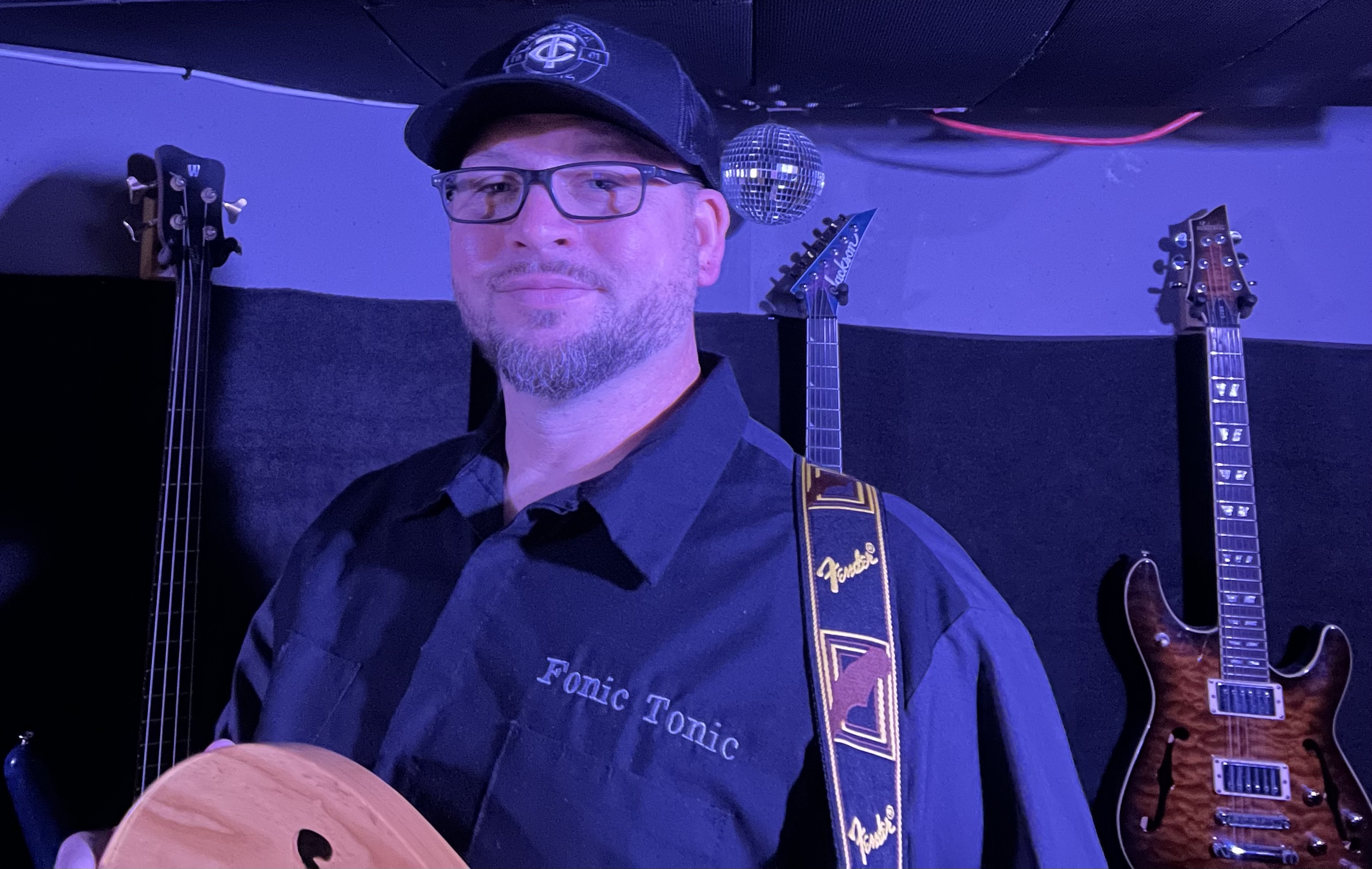
Fonic Tonic was built from real experience taking guitar lessons: keeping what actually helped, improving where teachers fell short, and drawing on completed music theory coursework plus over a decade playing in bands (including regional band 3rd Ears), collaborating on live music, and studio work until COVID interrupted the scene.
Shaped around each student’s own goals, the program prepares you to play guitar or bass cleanly, communicate in the shared language of music with bandmates and other musicians, or write and record original music independently.
Every topic follows the exact same worksheet and chart format so you absorb musical ideas quickly instead of learning a new layout every week. You build an organized binder of lasting references for practice, review, and songwriting, plus free PDF downloads so you can keep printing and studying independently.
Learn to use the guitar or bass itself as a visual calculator for navigating chords, scales, and keys. Once the methods click visually on the neck, you apply them right away instead of relying on sheets or endless rote memorization, building real independence that takes fewer future lessons.
Free online videos often trap players in paid ads, incomplete intros, and chasing whatever piece seems missing. Unlike linear instruments such as piano, guitar uses multiple methods for the same musical concepts. Fonic Tonic covers the full foundation, introduces all common methods and how they connect, and lets you adopt what works best.
Music theory is taught as a practical language: tools in your toolbox to think, hear, speak, write, and read music. We cover only what you actually need and apply it immediately, keeping your mind free when performing, writing songs, or playing with other musicians.
Notation is covered so you can read sharps, flats, and song keys alongside the practical shorthand guitarists rely on. Real-time sight-reading while playing is never required to advance, though reference sheets are included if you want to build reading skills on your own for jazz band or classical study.
Guitar Hero-style apps push you to memorize scrolling on-screen challenges while teaching very little about the instrument or music. Worse, pitch detection frequently misses notes even when played accurately, keeping you stuck in an ongoing subscription with minimal real progress.
The idea that beginners must start on an acoustic guitar is a myth. Electric guitars are generally easier on the hands and let beginners make faster progress. Pick the guitar you actually want to play, because excitement leads to consistent practice. Players who stick with it usually end up owning both anyway.
Acoustic, electric, and bass guitar, including flatpicking and fingerstyle across Americana, Folk, Bluegrass, Blues, Country, Rock, Metal, and Jazz. Learning a connected musical foundation makes picking up new genres later straightforward.
Get hands-on help with guitar setups and string changes, and learn how to handle them yourself. Drawing from live and recording work, Isaac also shares practical guidance on mic placement, amp settings, DI boxes, mixing boards, tube replacement, home recording, and basic pedalboard or effects setup whenever students ask.
Guitars and amplifiers can be provided at the Dilworth studio to make commuting or tight schedules easier (just let Isaac know ahead when possible). Bringing your own instrument is still preferred so it can be checked for maintenance needs.
Designed with the 10,000-hour rule in mind: focused, intentional practice matters far more than simply logging hours. The program helps you know exactly what to practice, recognize good vs. bad habits early, connect ideas cleanly, and prioritize what moves your playing forward.
Very little is needed to get started, and studio guitars and amplifiers can be borrowed during lessons if you want to try things out before buying.
Yamaha and Ibanez are consistently solid options for starter and intermediate instruments. Ultimately, choose the guitar you genuinely want to pick up and can comfortably afford.
Acoustic, electric, or bass guitar. Electric and bass players also need a practice amplifier and instrument cable.
A soft gig bag or hard-shell case to protect your instrument in storage and transit.
Keep a small mix of thicknesses handy. Nylon Dunlop 1.0 mm and 1.14 mm are preferred.
Free phone apps work well (Fender’s free tuner app is solid). For a clip-on or pedal unit, get a chromatic tuner.
Helpful early on and style-dependent. Kyser is a reliable brand (nylon-string classical guitars need a classical capo).
Keeps every Fonic Tonic worksheet, chord diagram, and fretboard reference chart organized together.